Mentorship & Outreach
Throughout my career, I have derived a great deal of joy and fulfillment from both mentoring students and running or taking part in outreach events for the public. Teaching, mentoring, and outreach are, at their roots, all exercises in communication and understanding -- they all require the ability to see where your audience/students are coming from and meet them where they are, effectively clarify any questions or issues they might have in terms they can understand, and all while doing so in the most entertaining/efficient/thorough way possible. I enjoy the challenge of teaching, public speaking, and volunteering and the fundamentally rewarding feeling of knowing you postitively touched someone's life and helped expand their horizons past where they were before.
Mentorship
 As a mentor, I am committed to encouraging, promoting, and helping any student I work with. My personal philoophy on mentorship is that as the mentor or advisor, it is your job to create an environment where any student (regardless of learning style) can become a better scientist, feel safe to ask questions without a fear of judgement, and have a great, positive, and productive research experience at the same time. When working with undergrad students, it is especially important to make sure they have a positive experience since an internship can often be someone's very first research project and can color their personal motivations for their career going forward.
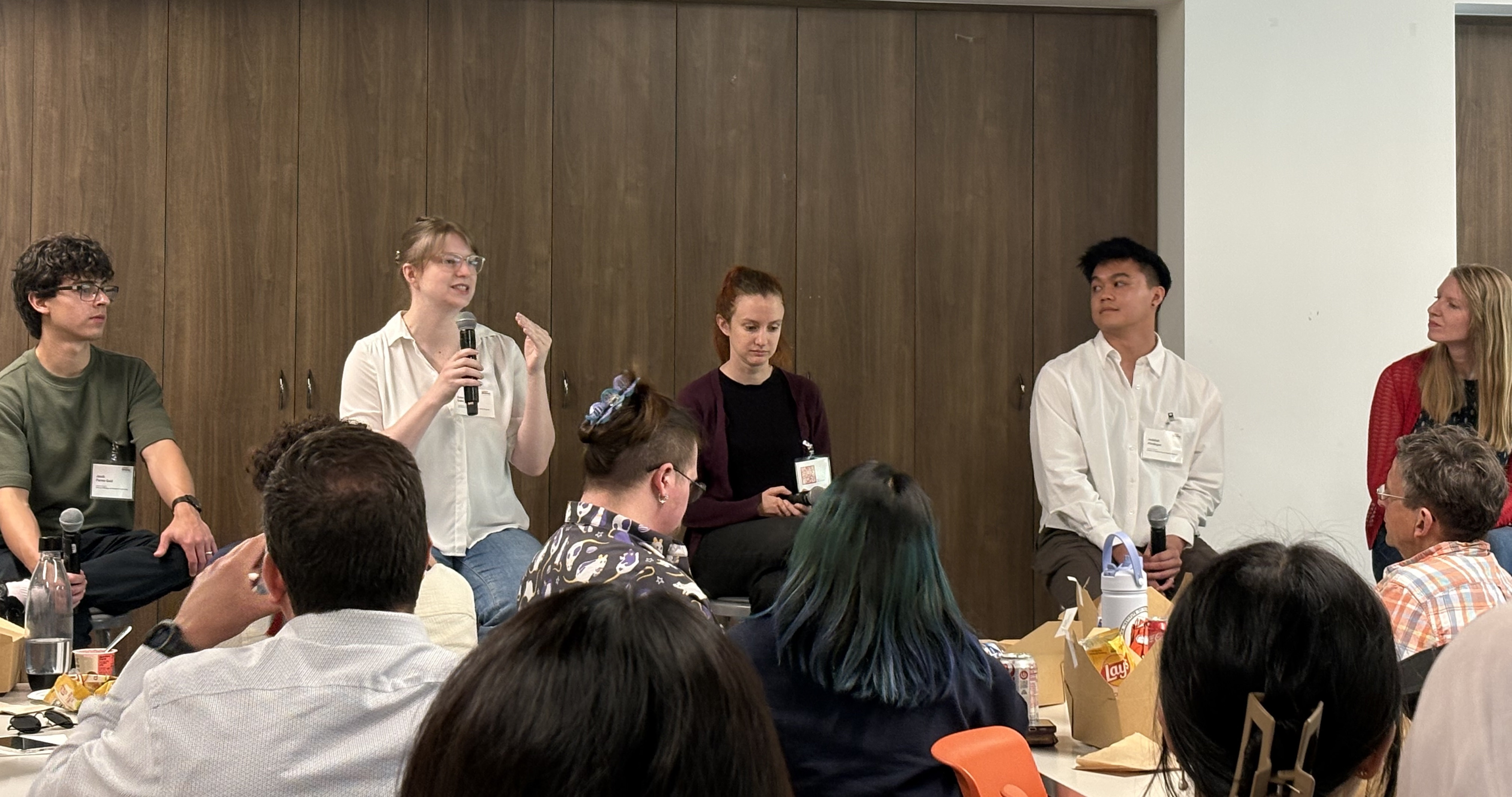
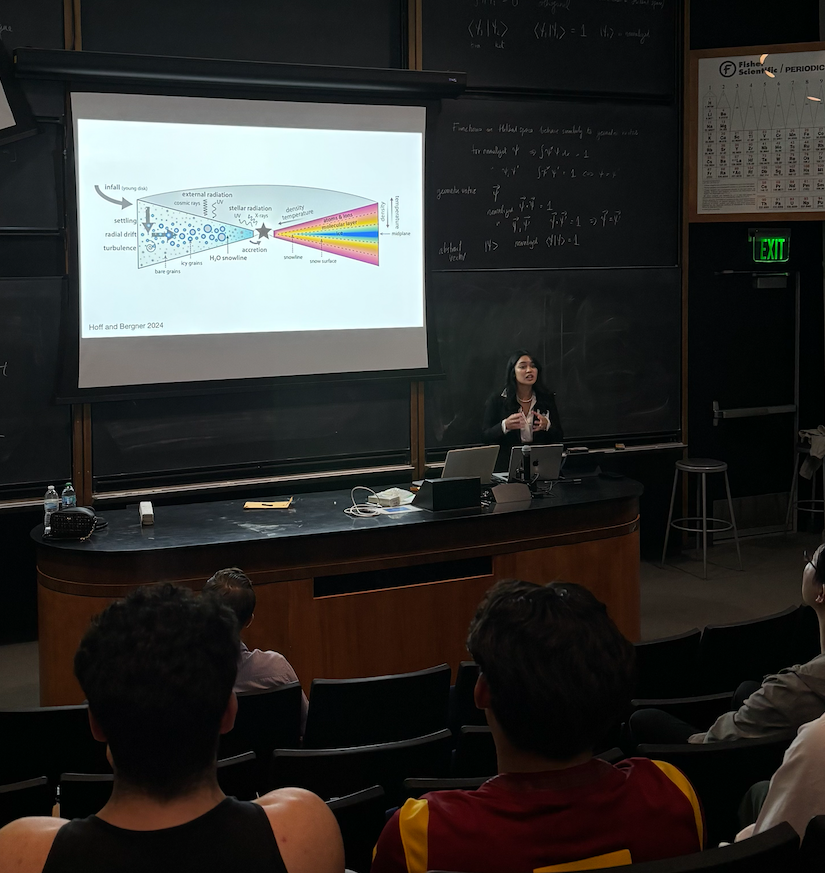
As an undergrad student, I worked as a lab TA for both physics and astronomy classes, as well as a private physics and astronomy tutor. In the latter half of grad school, I worked with more junior grad students to help introduce them to studying Jupiter's atmosphere. As a postdoc at JPL, I helped manage ~20-25 interns over 2021-2024 -- primarily Richard McKee (2021-2022) and Kennedi White (2023-2025) -- which entailed helping guide them through analyzing images and running models of Jupiter's atmosphere, helping troubleshoot errors in students' programs, providing advice on applying to graduate school/feedback on applications, etc. Kennedi successfully applied to grad school and started a PhD program at UCSC in 2025. At Caltech, I co-mentored rising sophomore Alana Nisperos over Summer 2025 on retrieving the properties of protoplanetary disks; Alana went on to place as a finalist in a Caltech speaking contest later that year (above/right), and presented her research at multiple conferences. This summer (2026), I will be working with an undergraduate student from my alma mater Whitman College on Jupiter NAIC observations after we won a grant through the college to help her find an external project advisor. Most recently, I was invited to be a panelist at a 2026 Caltech Mentoring Conference keynote event "In Conversation About Mentorship” (see banner image at top of page).
 I also place a great deal of importance on helping students from underrepresented backgrounds in STEM. I am a frequent volunteer with Científico Latino, an initiative to promote an environment of inclusivity in STEM and increase the number of scientists from underrepresented backgrounds in higher education in the sciences. My roles have included Graduate School Mentorship Initiative (GSMI) mentor for students applying to graduate programs in 2022 and 2025, as well as running mock interviews, etc. As a diversity committee co-chair on the Caltech Postdoctoral Committee, I initiated and hosted bystander intervention training for situations commonly experienced in academic settings. I feel very strongly about the responsibility of each scientist to create a welcoming and inclusive environment for everyone in the field and everyone who wants to enter it regardless of their identities, and that creating such an environment starts with simply always being kind, understanding, and helpful.
Outreach
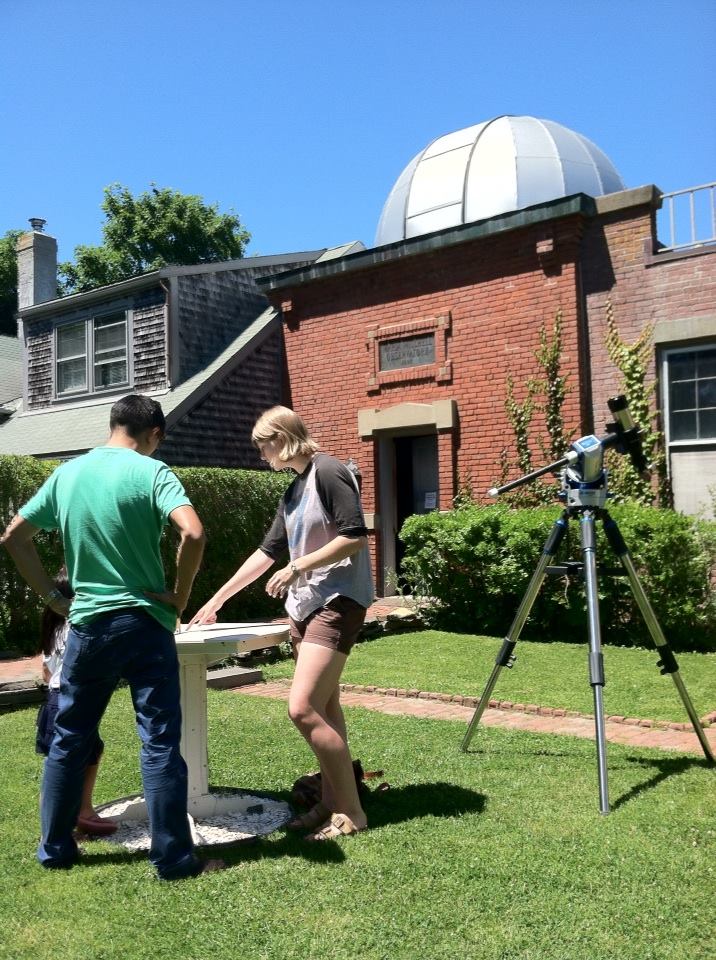
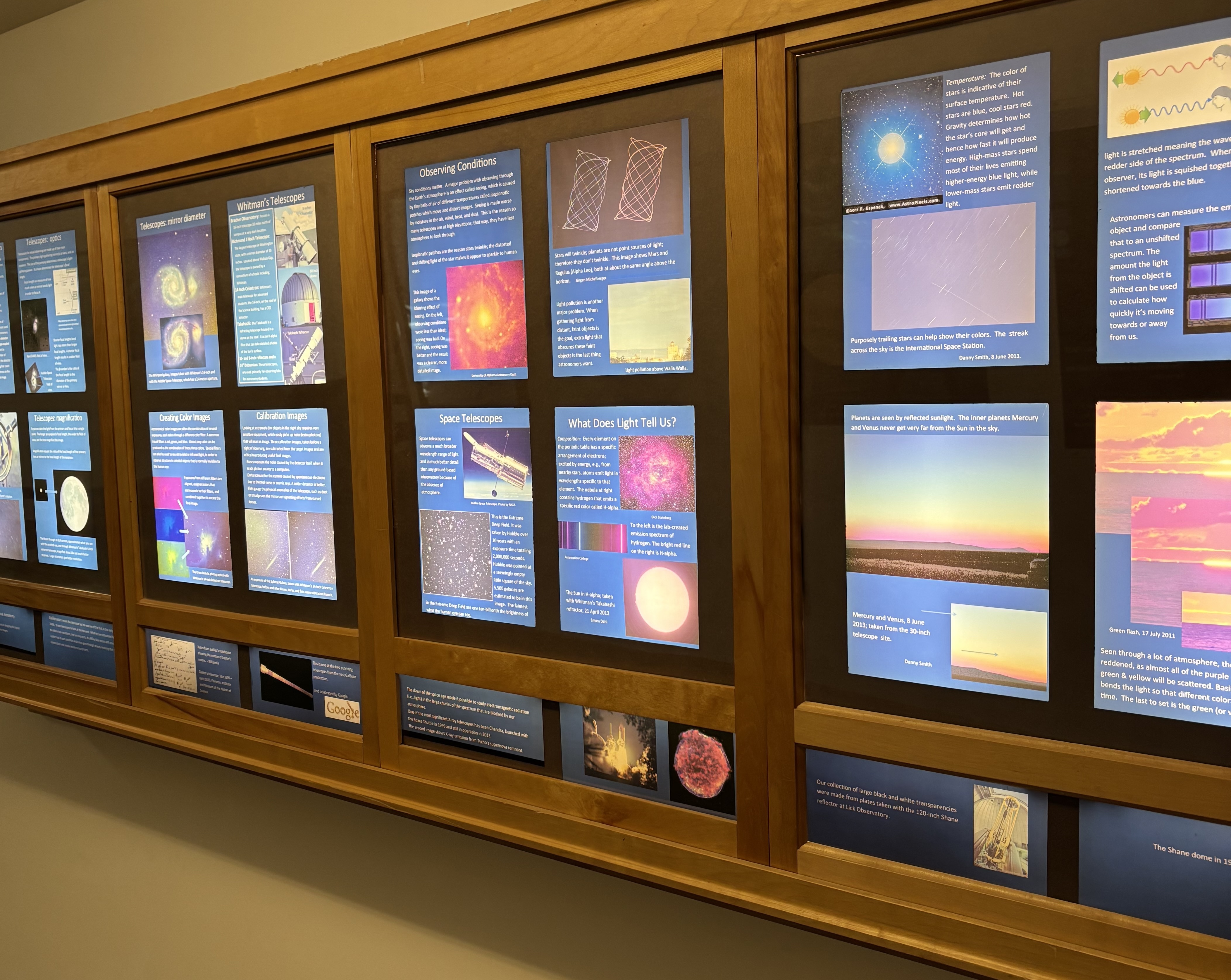 I have always actively sought out opportunities to engage in public outreach as much as I've been able. As an undergrad, I ran shows in Whitman College's analogue planetarium and wrote informative posters for the hallway outside (that as of 2025, are still there!) (see image at right). During my NSF REU at the Maria Mitchell Observatory on Nantucket in 2014, I helped run semi-weekly public observatory nights and gave public tours of the historical Vestal Street Observatory (above).
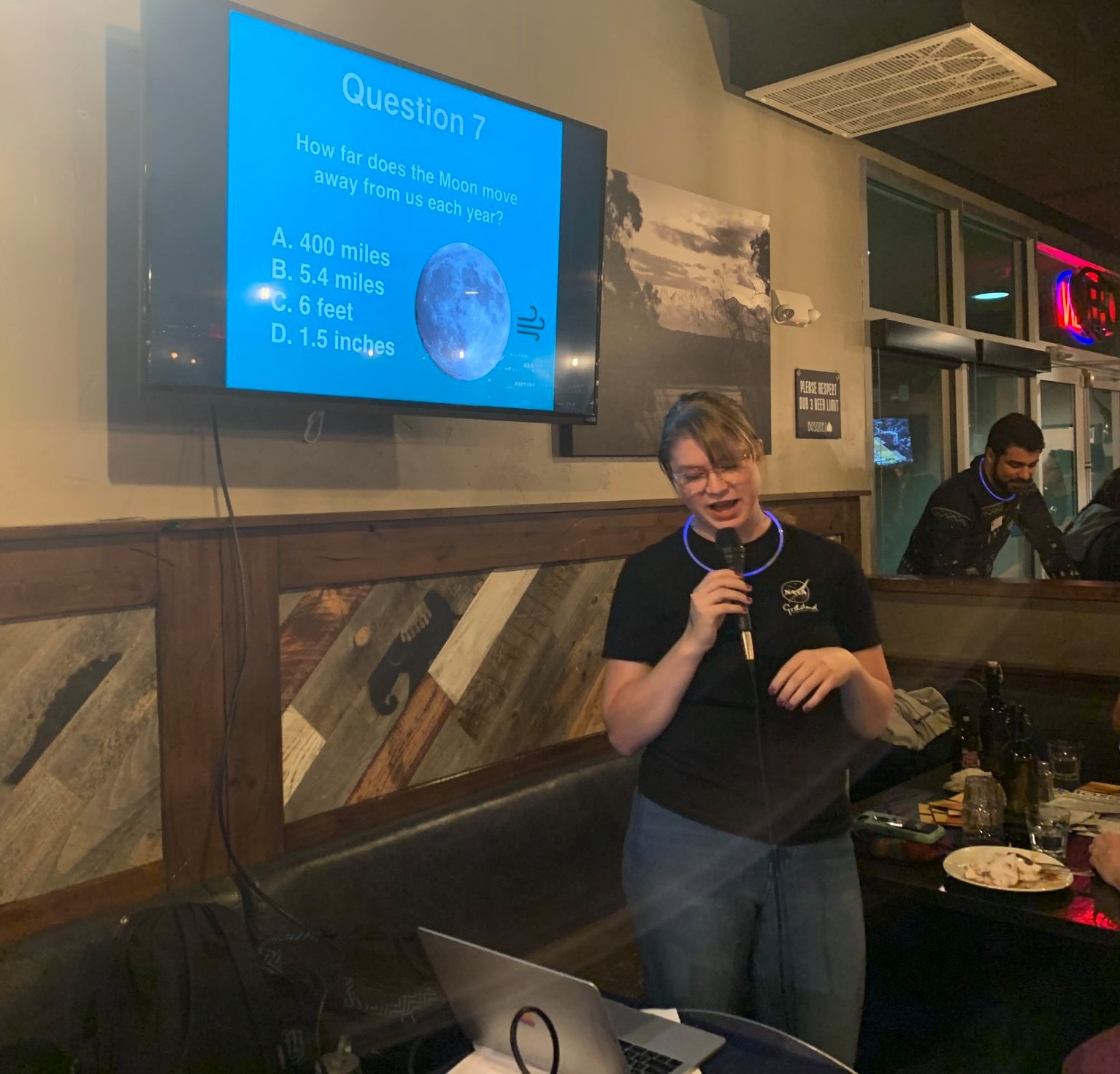 In grad school at New Mexico State University, the astronomy department was well-known locally for its outreach program, and was well-placed in southern New Mexico to serve not only the city of Las Cruces but El Paso and many surrounding poorer rural communities that might not otherwise have access to such resources. After participating in many outreach events during my first couple years, I ran the outreach program from 2017-2018 which required a great deal of communication and organization skills in order to coordinate volunteers, the activities they would host, and the events they would attend. We would run all sorts of events and activities: career days at elementary schools, outreach talks on the NMSU campus, public events for lunar eclipses, a build-your-own comet acitivty using dirt and dry ice, bringing out antique telescopes built by the discoverer of Pluto for farmer's markets, etc. Doing and coordinating outreach at NMSU was incredibly rewarding, and in all I volunteered 120+ hours of my time before the pandemic (not including the coordination efforts). In late 2019, I worked with a professor to initiate and coordinate a new chapter of Astronomy on Tap in Las Cruces (see me hosting the inaugural event, left). We were only able to hold 2 events before COVID locked things down, but the local chapter still hosts events and enriches the community.
As a postdoc it has been much harder to make time amid multiple science work commitments for outreach, but I hope to spend more time engaging directly with the public soon. Outreach-y opportunities have mostly come as invitations to speak as a science expert for press releases or to give tours of the JPL campus to friends and family. Being quoted in a IFLScience article was a great career milestone for me as a milleanial scientist, and I hope to have more similar opportunities soon!