Uranus Projects
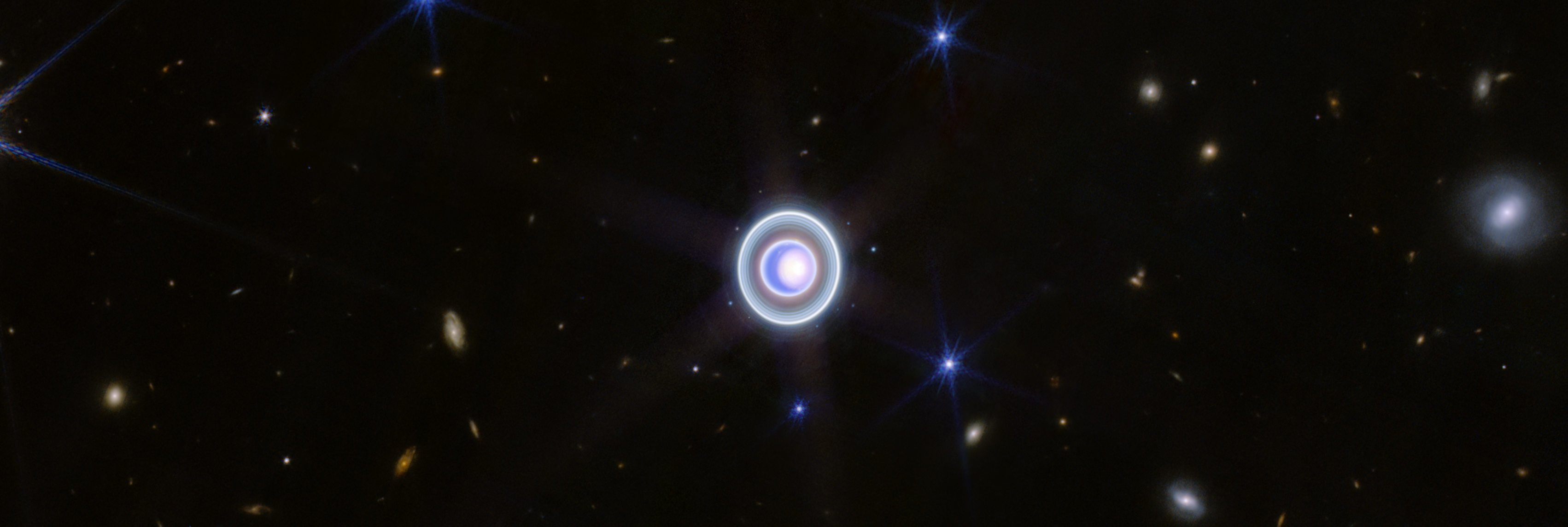
Since I was in grad school, I've worked hard to get involved with studies of Uranus's atmosphere, especially after a Uranus Orbiter and Probe (UOP) was prioritized in the most recent NASEM decadal survey. I participated in JPL's Planetary Science Summer School (PSSS) in 2018, where we conducted a study for a New Fronteirs-class mission to Uranus. Since then I have participated in multiple Uranus mission-focused workshops that sought to maintain community interest and momentum towards such the UOP, including an invited talk on Uranus's atmospheric circulation at the International Space Science Institute in Bern, Switzerland. I've also participated in studies of Uranus's heat flux through the atmosphere, including a PI-led STScI grant on modeling Uranus's Bond albedo, led observations of a stellar occultation through Uranus's upper atmosphere, and served as a science advisor for the December 2023 JWST press release on NIRCam Uranus images.
PSSS Mission - Quest to Uranus to Explore Solar System Theories (QUEST)
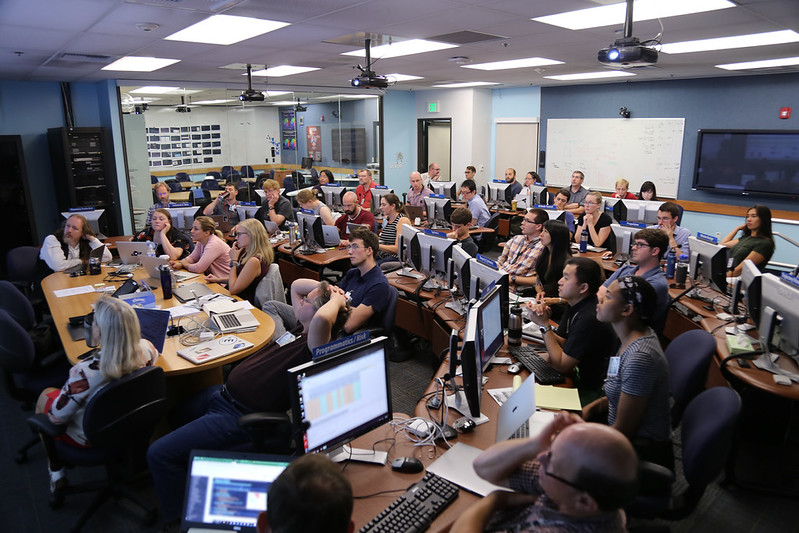
In 2018, I participated in the 30th JPL Planetary Science Summer School (PSSS) as the Science Lead. We developed a New Fronteirs-class Uranus orbiter that would inspect the planet with a mangetometer, microwave radiometer, plasma wave receiver, radio antenna, and wide-angle camera. The mission study was published in Acta Astronautica and you can read it here.
Uranian Occultation Observations
I participated in an international observing campaign to observe a stellar occultation through Uranus's upper atmosphere in April 2025 by PI'ing the observing proposal and leading daytime near-IR observations at NASA's IRTF on Mauna Kea. While the data we collected were iffy due to weather conditions, observations were collected at a multitude of sites and the results are currently being written into a paper.
Uranus's Heat Flux and Bond Albedo
I PI'd and won an HST archival proposal to study the effects of Uranus's Bond albedo on the degree of released internal heat. A member of our team published a paper using this method and found that we might have been indeed underestimating the amount of heat released by Uranus. The next steps with this study will involve incorpoarting additional weather and seasonal effects to identify the exact degree of internal heat release variation over time.